The best way to Learn Piano Sheet Music, and embark on a journey of musical discovery. As you delve into the world of piano sheet music, you’ll encounter a wealthy tapestry of sound and construction, every notice and rhythm revealing a brand new layer of complexity and wonder. The method of studying to learn piano sheet music isn’t merely about deciphering symbols and markings, however about creating a deep understanding of the language of music itself.
Understanding the fundamentals of piano sheet music is important for any aspiring pianist, and it’s the basis upon which all additional musical data and talent can be constructed. On this complete information, we are going to take you thru the elemental ideas and strategies that may allow you to learn and perceive piano sheet music with confidence and precision.
Understanding the Fundamentals of Piano Sheet Music
Piano sheet music is a singular language that enables musicians to convey musical concepts and constructions in a transparent and concise method. Music notation and workers notation are two basic parts of this language that each pianist ought to perceive.
Music notation is the system of symbols and marks used to symbolize music. It encompasses numerous parts, together with pitch, rhythm, and articulation, which mixed create the sound and really feel of music. Employees notation is a particular sort of music notation used on a five-line workers, the place every line and house represents a particular pitch.
The Components of Employees Notation
The workers consists of 5 traces and 4 areas, every representing a particular pitch or notice. The traces and areas are labeled with notes and rests, which point out the pitches and durations of the music. Understanding the workers and its parts is essential for studying and deciphering piano sheet music.
The workers is split into two most important sections: the treble clef and the bass clef. The treble clef is used for the right-hand half, whereas the bass clef is used for the left-hand half. Every notice on the workers has a particular pitch worth, and the mix of notes on a number of staffs creates the musical concord.
Understanding Rhythm and Meter
Rhythm and meter are important parts of music notation that present the construction and timing of the music. Rhythm refers back to the sample of lengthy and quick sounds or silences, whereas meter refers back to the sample of sturdy and weak beats.
The time signature, represented by two numbers separated by a horizontal line, signifies the meter and rhythm of the music. For instance, a time signature of 4/4 signifies that there are 4 beats in a bar and a robust emphasis on the primary beat of every bar. Understanding rhythm and meter permits pianists to play the music with the right tempo and phrasing.
Studying the Employees
To learn the workers, pianists want to know the relationships between the traces, areas, and pitches. The traces and areas are labeled with notes, which have particular pitches and durations.
Listed here are the notes on the workers:
- Strains 1 and three: E and G ( treble clef) / E and G (bass clef)
- Strains 2 and 4: F and A (treble clef) / F and A (bass clef)
- Strains 5: Treble clef: G, Bass clef: G
- Areas 1 and three: F and A (treble clef) / F and A (bass clef)
- Areas 2 and 4: G and B (treble clef) / G and B (bass clef)
- House 5: Treble clef: A, Bass clef: none
Studying the Strains and Areas of the Employees
Studying the workers is an important a part of understanding piano sheet music. The workers consists of 5 traces and 4 areas, the place notes are represented. To start out, let’s break down the way to learn notes on the traces and areas of the workers.
Observe Values
Observe values decide the period of a notice. The commonest notice values are complete, half, quarter, and eighth notes. A complete notice is the longest notice worth and lasts for 4 beats, whereas an eighth notice is the shortest and lasts for one beat.
- Complete Observe: A complete notice is represented by an open circle and lasts for 4 beats.
- Half Observe: A half notice is represented by a closed circle and lasts for 2 beats.
- Quarter Observe: 1 / 4 notice is represented by a closed circle with a stem and lasts for one beat.
- Eighth Observe: An eighth notice is represented by a closed circle with a stem and a flag, and lasts for half a beat.
Observe values might be mixed to create extra advanced rhythms.
Accidentals, The best way to learn piano sheet music
Accidentals are symbols that alter the pitch of a notice. There are three most important varieties of accidentals: flats, sharps, and naturals.
- Flats: A flat lowers the pitch of a notice by a semitone. For instance, a B flat is decrease than a B pure.
- Sharps: A pointy raises the pitch of a notice by a semitone. For instance, a C sharp is increased than a C pure.
- Naturals: A pure cancels out an unintentional. For instance, a B pure cancels out a earlier B flat or B sharp.
Observe that accidentals solely apply to the notice they’re positioned subsequent to, except a pure is positioned after it.
Chord Progressions and Harmonies
Chord progressions are a sequence of chords performed in a particular order. Harmonies are the mix of a number of pitches sounding concurrently. To learn chord progressions and harmonies in piano sheet music, search for teams of notes performed collectively, typically indicated by a sequence of numbers or a chord image.
- Chord Development: A chord development is indicated by a sequence of numbers representing the chord adjustments, comparable to 1-4-5 or C-G-Am.
- Concord: A concord is indicated by a number of notes sounded collectively, typically represented by stems and flags for various pitches inside the chord.
Studying chord progressions and harmonies requires an understanding of chord principle and the flexibility to acknowledge chord patterns and harmonic constructions.
Studying Chord Symbols
To learn chord symbols, establish the notes of the chord, then search for the chord sort (maj, min, dim, aug). For instance, a C main chord consists of the notes C-E-G and is indicated by the image Cmaj.
Cmaj = C-E-G
Studying chord symbols and harmonies requires apply and expertise with piano sheet music and chord principle.
Studying Roman Numerals
Roman numerals are used to point chord adjustments and harmonic construction. For instance, a development from C to G to Am might be indicated as I-V-vi, the place I represents the tonic chord, V represents the dominant chord, and vi represents the minor chord.
I-V-vi = C-G-Am
Studying Roman numerals and understanding chord principle requires an understanding of chord progressions and harmonic constructions.
Understanding Time Signatures and Rhythm
Time signatures are an important side of studying piano sheet music. They point out the meter and subdivision of the music, which is important for understanding the rhythm and timing of a bit.
A time signature consists of two numbers, with the highest quantity representing the variety of beats in a measure and the underside quantity indicating the kind of notice that will get the primary beat. For instance, in a 4/4 time signature, there are 4 beats in a measure and the quarter notice will get the primary beat. Understanding time signatures will show you how to acknowledge the rhythm and timing of a bit, permitting you to play with confidence and expression.
Breaking Down Time Signatures
When studying time signatures, it’s essential to perceive the next parts:
- The highest variety of the time signature, which represents the variety of beats in a measure. This may be any complete quantity, comparable to 2, 3, or 4.
- The underside variety of the time signature, which signifies the kind of notice that will get the primary beat. This could be a complete quantity, comparable to 2, 3, or 4, or it may be a fraction, comparable to 1/2 or 3/4.
- The meter, which is indicated by the point signature. This may be any meter, comparable to 2/4, 3/4, or 4/4.
- The subdivision of the rhythm, which is indicated by the notice values and rests within the music.
By breaking down time signatures on this manner, you may perceive the connection between the highest and backside numbers, which is able to show you how to acknowledge the meter and subdivision of the music.
Understanding Observe Durations
Observe durations are indicated by the size of the notice head on the workers. The size of the notice head corresponds to the size of time the notice is performed. For instance:
- Complete notes are represented by a crammed notice head and are performed for 4 beats.
- Half notes are represented by an open notice head and are performed for 2 beats.
- Quarter notes are represented by a crammed notice head with a stem and are performed for one beat.
- Eighth notes are represented by an open notice head with a stem and are performed for half a beat.
By understanding notice durations, you may acknowledge the rhythm and timing of a bit and play it with confidence and expression.
Studying Advanced Polyrhythms and Meter Adjustments
Polyrhythms and meter adjustments might be difficult to learn, however they will add complexity and curiosity to a bit of music. To learn advanced polyrhythms and meter adjustments, observe these steps:
- Perceive the time signature and the meter of the piece.
- Determine the polyrhythmic patterns or meter adjustments, that are normally indicated by notice adjustments or rests.
- Learn the rhythm and timing fastidiously, listening to the notice values and rests.
- Follow the piece slowly and steadily enhance the tempo as you turn out to be extra snug with the rhythm and timing.
A time signature of 6/8 is equal to a rhythm of 4 sixteenth notes, with two teams of three notes and one notice. Understanding the time signature and the rhythm will show you how to acknowledge and play this advanced rhythm with ease.
By following these steps, you may learn advanced polyrhythms and meter adjustments with confidence and play the music with expression and nuance.
Decoding Dynamics and Articulation: How To Learn Piano Sheet Music
When studying piano sheet music, dynamics and articulation are essential parts to know and interpret accurately. Dynamics discuss with the various levels of loudness and softness, whereas articulation refers back to the manner notes are performed, together with the contact, velocity, and emphasis. On this part, we are going to focus on the various kinds of dynamics and articulation markings utilized in piano sheet music.
Dynamics Markings
Dynamics markings in piano sheet music are used to point the depth or loudness of a passage. The commonest dynamic markings utilized in piano sheet music are:
- ff (fortissimo) – extraordinarily loud
- f (forte) – reasonably loud
- mf (mezzo-forte) – reasonably loud
- mp (mezzo-piano) – reasonably delicate
- p (piano) – delicate
Dynamic markings are normally indicated by phrases or abbreviations positioned above or beneath the workers. For instance, ff is perhaps indicated by the phrase “FF” above the workers, whereas mp is perhaps indicated by the abbreviation “mp” above the workers.
Articulation Markings
Articulation markings in piano sheet music point out the best way notes are performed, together with the contact, velocity, and emphasis. Some widespread articulation markings embrace:
- Legato – easy, linked enjoying, the place notes are performed and not using a break between them.
- Staccato – quick, indifferent enjoying, the place notes are performed with a slight pause between them.
- Marcato – barely accented, the place notes are performed with a slight emphasis.
Articulation markings are normally indicated by phrases or abbreviations positioned above or beneath the workers. For instance, staccato is perhaps indicated by the abbreviation “stacc” above the workers, whereas legato is perhaps indicated by the phrase “legato” above the workers.
Nuances of Expression
Along with dynamics and articulation markings, piano sheet music additionally contains nuances of expression that contribute to the general interpretation of the music. These embrace:
- Phrasing – the best way notes are grouped into phrases or sections, together with pauses and breath marks.
- Tonguing – the usage of totally different tonguing patterns, comparable to legato or staccato.
- Dynamic contrasts – the usage of totally different dynamics inside a passage to create distinction and emphasis.
These nuances of expression can significantly affect the general interpretation and feeling of the music, and are a necessary a part of bringing the music to life.
Decoding Nuances
When deciphering nuances of expression in piano sheet music, it is important to pay shut consideration to the markings and indications offered. Contemplate the next ideas:
- Take note of phrase markings, comparable to commas and semicolons, which point out the place to pause or breathe between phrases.
- Contemplate the usage of totally different tonguing patterns, comparable to legato or staccato, to create distinction and emphasis inside a passage.
- Search for dynamic contrasts inside a passage, and think about using totally different dynamics to create distinction and emphasis.
By contemplating these nuances of expression and paying shut consideration to the markings and indications offered, you may create a wealthy and expressive interpretation of the music.
This part gives a fundamental overview of deciphering dynamics and articulation markings in piano sheet music. As you proceed to review and apply, pay shut consideration to the nuances of expression and markings offered within the music to convey the music to life.
Understanding the Function of Pedaling in Piano Music
Understanding the function of pedaling in piano music is essential to unlock the total expressive potential of the instrument. The pedals are a set of three pedals positioned on the backside of the piano, and every one serves a particular goal. The maintain pedal, the sostenuto pedal, and the una corda pedal all work collectively to create a variety of tonal colours and textures.
Studying Pedaling Marks
When studying piano sheet music, you may typically come throughout pedaling marks that point out when to make use of the maintain, sostenuto, or una corda pedals. These marks are normally denoted by a letter or a logo, and they are often discovered at the start of a bit of music or at particular factors within the rating.
The maintain pedal, denoted by a circle with a stem, is used to maintain notes which can be being performed. When the pedal is pressed down, it permits the sound of the notes to resonate and continues to ring out even after the fingers have lifted off the keys. The sostenuto pedal, denoted by a curved line, is used to maintain particular notes whereas permitting others to decay rapidly. This pedal is usually utilized in music that requires a whole lot of expression and nuance.
Sostenuto Pedal Strategies
The sostenuto pedal can be utilized in numerous methods to create advanced and expressive sounds. Listed here are some widespread strategies utilized in piano music:
- Legato enjoying: This method entails enjoying two or extra notes in a easy, linked method, utilizing the sostenuto pedal to maintain the sound.
- Staccato enjoying: This method entails enjoying notes in a brief and indifferent method, utilizing the sostenuto pedal to launch the sound rapidly.
- Sostenuto glissando: This method entails sliding from one notice to a different whereas utilizing the sostenuto pedal to maintain the sound.
Una Corda Pedaling Strategies
The una corda pedal, denoted by a horizontal line with a wedge form, is used to vary the tone coloration of the piano. When this pedal is pressed down, it shifts the hammers to strike a single string, moderately than three strings, producing a softer and extra mellow sound.
- Una corda solo: This method entails enjoying a melody or a chord with the una corda pedal, creating a lovely and intimate sound.
- Una corda pedal level: This method entails utilizing the una corda pedal as a pedal level, creating a way of stability and pressure beneath a melody or a chord.
Nuanced Pedaling Strategies
To carry out nuanced pedaling strategies in piano music, it is important to experiment with totally different pedaling combos and strategies. Listed here are a number of ideas to remember:
* Follow pedaling slowly and intentionally, listening to the best way the sound adjustments when the pedal is pressed down or launched.
* Experiment with totally different pedaling combos to create distinctive sounds and textures.
* Hearken to recordings {of professional} pianists to get a way of how they use pedaling in numerous musical contexts.
* Follow enjoying with a metronome to develop a way of rhythm and timing when pedaling.
By understanding the function of pedaling in piano music and working towards totally different pedaling strategies, you can unlock the total expressive potential of the instrument and take your enjoying to the subsequent degree.
Studying Music with A number of Staves
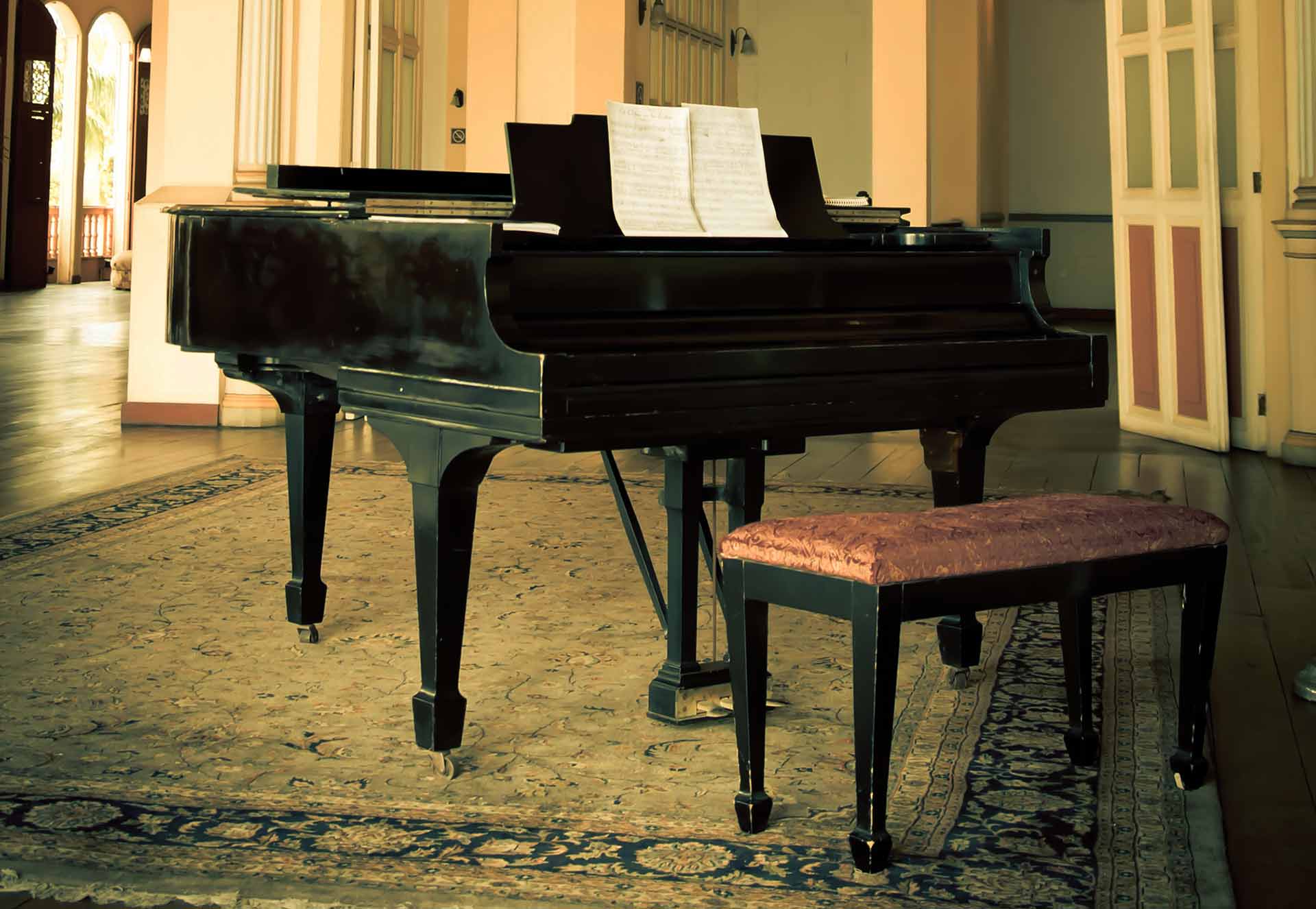
When studying piano sheet music, you are typically confronted with a number of staves, which isn’t a problem for skilled musicians, however for novices, it may be fairly complicated. Understanding the way to learn music with a number of staves is a necessary side of piano enjoying. It entails navigating by means of totally different musical elements, harmonies, and counterpoint, that are introduced throughout a number of staves on the sheet music. Studying music with a number of staves requires an in-depth understanding of the musical parts and the way they work together with one another.
Piano Duets and Accompaniment Components
A piano duet, typically additionally known as a piano duo, is a musical composition for 2 pianists. It typically presents a difficult however rewarding musical expertise, the place two pianists should work collectively to supply a balanced and harmonious sound. In piano duets, musicians should develop their expertise in studying sheet music, understanding the dynamics and articulation, and coordinating their actions to realize the perfect end result.
- Piano duets require sturdy communication and cooperation between the 2 pianists. It is important to determine a transparent understanding of the musical parts, together with dynamics, articulation, and phrasing.
- The 2 pianists should work collectively to realize a balanced sound, typically by adjusting their enjoying strategies and quantity ranges in real-time.
- Studying sheet music with a number of staves might be difficult in piano duets, as every pianist should learn the notation for their very own half, whereas additionally being conscious of their companion’s half.
Accompaniment elements, alternatively, contain enjoying a particular function within the musical composition, typically offering a harmonic basis for the primary melody. In accompaniment elements, pianists should perceive the way to play a supportive function, typically utilizing chord progressions and harmonic textures to create a wealthy and fascinating sound.
- Accompaniment elements typically contain enjoying chords, arpeggios, or damaged chord patterns to create a harmonic basis for the primary melody.
- Pianists should fastidiously learn the sheet music, listening to the chord progressions, rhythm, and dynamics.
- Accompaniment elements might be a superb manner for pianists to develop their expertise in studying chord progressions and harmonies, in addition to their skill to play advanced rhythmic patterns.
Understanding Advanced Harmonies and Counterpoint
Studying music with a number of staves typically entails advanced harmonies and counterpoint, which might be difficult to navigate. To grasp advanced harmonies and counterpoint, musicians should develop their expertise in studying sheet music, in addition to their musical principle data.
- Advanced harmonies and counterpoint contain a number of unbiased musical traces that interweave and work together with one another.
- Studying sheet music with a number of staves requires an in-depth understanding of musical principle, together with chord progressions, harmonic capabilities, and counterpoint strategies.
- Growing expertise in studying advanced harmonies and counterpoint may also help pianists to create wealthy and fascinating musical textures, in addition to to know the nuances of various musical types.
When studying sheet music with a number of staves, the pianist’s skill to know advanced harmonies and counterpoint is important. To realize this, pianists should develop their expertise in studying sheet music, in addition to their musical principle data. This requires a deep understanding of chord progressions, harmonic capabilities, and counterpoint strategies.
Studying and Performing Layered Harmonies and Textures
Studying and performing layered harmonies and textures entails navigating by means of a number of musical traces which can be introduced throughout a number of staves on the sheet music. This requires an in-depth understanding of how the totally different musical parts work together with one another, and the way they contribute to the general musical texture.
- Layered harmonies and textures typically contain interweaving a number of musical traces that create a wealthy and fascinating sound.
- Studying sheet music with a number of staves requires an in-depth understanding of musical principle, together with chord progressions, harmonic capabilities, and counterpoint strategies.
- Growing expertise in studying and performing layered harmonies and textures may also help pianists to create advanced and fascinating musical compositions.
When studying and performing layered harmonies and textures, pianists should fastidiously learn the sheet music, listening to the notation for every particular person voice or line. This requires a deep understanding of musical principle, in addition to the flexibility to navigate by means of advanced musical textures.
Transposing and Modifying Piano Sheet Music
Transposing piano sheet music entails altering the important thing or pitch of the music with out altering its melody or concord, whereas modifying it entails making adjustments to the unique composition. Each strategies are important for musicians to adapt music to their wants or to swimsuit totally different devices or ensembles. On this part, we are going to discover the way to transpose and modify piano sheet music successfully.
Understanding Transposition
Transposition is the method of adjusting the pitch of a bit of music with out altering its melody or concord. It entails adjusting the important thing or tonality of the music, which might be achieved by rewriting the sheet music in a brand new key. There are a number of explanation why transposition is important in music, together with:
- Celebrating particular events: Many individuals desire to play piano music that’s acquainted to them, which is why transposing music right into a key that fits their vary could make it simpler to carry out.
- Accommodating vocal or instrumental limitations: Transposition may also help musicians overcome vocal or instrumental limitations by adapting the music to their vary.
- Creating totally different moods and atmospheres: Transposing music into totally different keys can create distinct moods and atmospheres, making it appropriate for numerous performances and occasions.
Transposing Strategies
To transpose piano sheet music, you should use one of many following strategies:
- Handbook transposition: This entails rewriting the sheet music in a brand new key by hand, which might be time-consuming and susceptible to errors.
- Software program help: Utilizing music notation software program, comparable to Finale or Sibelius, could make transposition faster and extra correct.
- Key signatures: Altering the important thing signature will also be used to transpose music, though this technique might require extra changes to the sheet music.
Time Signature and Tempo Modifications
Modifying the time signature and tempo of piano sheet music entails altering the rhythm and velocity of the music. This may be achieved by making use of the next guidelines:
- Altering the numerator and denominator: Altering the numerator (high quantity) and denominator (backside quantity) can change the time signature and rhythm of the music.
- Utilizing notice values: Modifying notice values, comparable to altering quarter notes to eighth notes, can change the tempo and really feel of the music.
- Making use of rhythmic patterns: Making use of new rhythmic patterns or syncopation can add complexity and curiosity to the music.
Including New Components
Including new parts to piano sheet music entails incorporating new notes, rhythms, or harmonies that weren’t current within the unique composition. This may be achieved by:
- Including new melodies: Introducing new melodies or countermelodies can add depth and curiosity to the music.
- Introducing new harmonies: Including new harmonies or chord progressions can change the harmonic construction of the music.
- Utilizing results and ornaments: Incorporating results and ornaments, comparable to vibrato or trills, can add expression and emotion to the music.
Pedaling and Different Strategies
Pedaling and different strategies will also be used to switch piano sheet music. These embrace:
- Maintain pedal: The maintain pedal can be utilized to maintain notes, making a richer and extra resonant sound.
- Tender pedal: The delicate pedal can be utilized to melt the sound of the music, making a extra refined and delicate texture.
- Expressive pedaling: Pedaling will also be used so as to add expression and emotion to the music, making a extra dynamic and fascinating efficiency.
Working towards and Performing Piano Sheet Music
Working towards piano sheet music is a necessary a part of turning into a talented pianist. By breaking down advanced music into smaller sections and steadily constructing as much as bigger items, pianists can enhance their approach, construct confidence, and develop a robust musical basis. Whether or not you are a newbie or a complicated pianist, establishing a daily apply routine is essential for attaining your musical targets.
Breaking Down Piano Music into Manageable Sections
When confronted with a troublesome piano piece, it is tempting to attempt to deal with it abruptly. Nonetheless, this may result in frustration and burnout. As a substitute, divide the music into smaller sections, specializing in one space at a time.
- Give attention to a single part or passage at a time, moderately than attempting to play all the piece.
- Determine essentially the most difficult elements of the music and focus on these areas first.
- Break down even small sections into additional sub-parts to develop finger independence and dexterity.
- Follow every part slowly and intentionally, growing velocity and accuracy as you turn out to be extra snug with the music.
By breaking down piano music into manageable sections, you can apply extra successfully, establish areas that want enchancment, and make regular progress in direction of your musical targets.
Growing a Follow Routine
A well-structured apply routine is important for attaining constant progress in your piano research. Listed here are some ideas for creating an efficient apply routine:
- Set particular, achievable targets for every apply session.
- Dedicate a block of time to apply every day, ideally on the identical time every day.
- Heat up with workouts and finger stretches earlier than working towards harder items.
- Follow slowly and intentionally, specializing in accuracy and management.
- Take common breaks to calm down and recharge.
By following a structured apply routine, you can monitor your progress, establish areas that want enchancment, and make regular progress in direction of your musical targets.
Overcoming Technical Obstacles
Even with a well-structured apply routine, you could encounter technical obstacles that sluggish your progress. Listed here are some ideas for overcoming these challenges:
- Determine the supply of the issue: is it finger independence, finger energy, hand place, or one thing else?
- Break down the problematic part into smaller elements and apply every half slowly and intentionally.
- Use know-how to help your apply, comparable to metronome apps or apply software program.
- Search steering from a professional piano instructor or teacher.
By figuring out and addressing technical obstacles, you can overcome challenges and transfer ahead in your piano research.
Growing a Performable Piece
As you apply and construct up your expertise, you may ultimately work in direction of performing an entire piece. Listed here are some ideas for creating a performable piece:
- Choose a bit that you simply’re obsessed with and have a robust musical connection to.
- Follow the piece in sections, constructing as much as the total efficiency.
- Give attention to accuracy, management, and expression, moderately than velocity or technical complexity.
- Follow performing the piece in numerous contexts, comparable to in entrance of a mirror, members of the family, or pals.
By following these steps, you can develop a performable piece that showcases your expertise and brings pleasure to your self and others.
Keep in mind, apply is essential to creating your piano expertise. By breaking down advanced music into manageable sections, establishing a structured apply routine, and overcoming technical obstacles, you can obtain your musical targets and convey pleasure to your self and others together with your music.
Final Conclusion
As you start your journey of studying to learn piano sheet music, do not forget that it’s a lifelong course of that requires endurance, dedication, and a willingness to study. The extra you apply and apply the ideas and strategies introduced on this information, the extra you’ll develop your expertise and deepen your understanding of the music. Keep in mind to remain curious, preserve exploring, and by no means cease studying, for it’s within the act of studying that we develop and evolve as musicians and as people.
FAQ Overview
What’s one of the simplest ways to apply studying piano sheet music?
Begin with sluggish apply, specializing in accuracy and approach, and steadily enhance the tempo as you turn out to be extra snug. It is also important to apply frequently and set achievable targets for your self.
How can I develop my sight-reading expertise?
Common apply, specializing in studying sheet music with out prior data of the piece, and utilizing know-how, comparable to on-line sight-reading instruments and apps, may also help enhance your sight-reading expertise.
What are some widespread errors to keep away from when studying piano sheet music?
Pay attention to incorrect fingerings, unsuitable notes, and poor hand place, and ensure to take common breaks to keep away from fatigue and preserve focus.

